


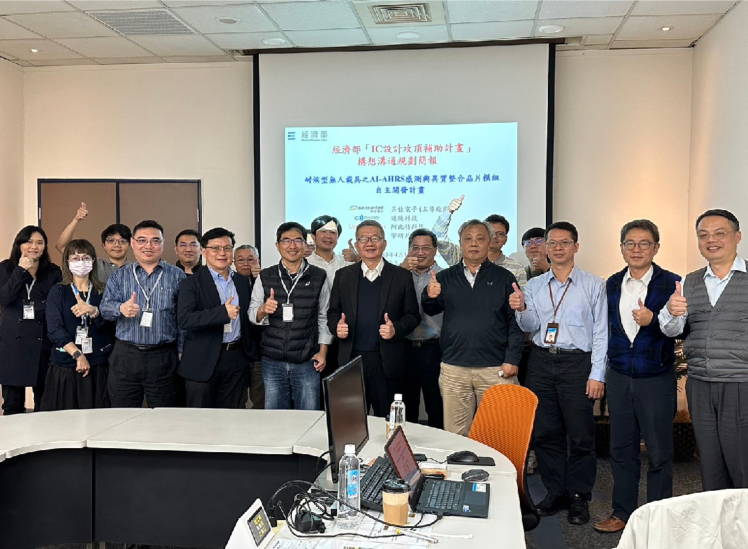
Facing the challenges of intense global competition and technological barriers in the sensor chip market, AWAN Technology has partnered with the Industrial Technology Research Institute (ITRI).
We are actively investing in the indigenous R&D of high-end drone sensor chips and modules, dedicated to building Taiwan's own core technology.
The stability and precision of a drone's flight rely on efficient attitude control and navigation capabilities.
In the past, key sensor products like 6-axis IMUs and AHRS have historically relied on foreign imports. This not only subjects them to export regulations, making them difficult to acquire, but also offers low flexibility for customization.
Now, by leveraging ITRI's long-standing R&D foundation combined with our algorithm technology and industry application experience, we have successfully advanced the development of domestically produced IMU chips and AHRS modules,
officially filling the technological gap in Taiwan's high-end drone sensor market.
The results of our collaborative development not only feature autonomous attitude and positioning functions but can also operate stably in environments with electromagnetic interference, strong winds, vibrations, and GPS-denied conditions.
Future high-end products will move towards integrating AI computing models for real-time perception and flight deviation compensation, enabling drones to maintain optimal flight performance in all types of harsh environments.
This is not just a technological breakthrough for AWAN and ITRI; it represents a key step for Taiwan in developing indigenous high-end drone technology and decoupling its chip supply chain from red-supply-chain influences.
By the end of 2025, we expect to launch the first domestically produced high-end IMU chip module, ushering in a new era for Taiwan's autonomous flight technology.